
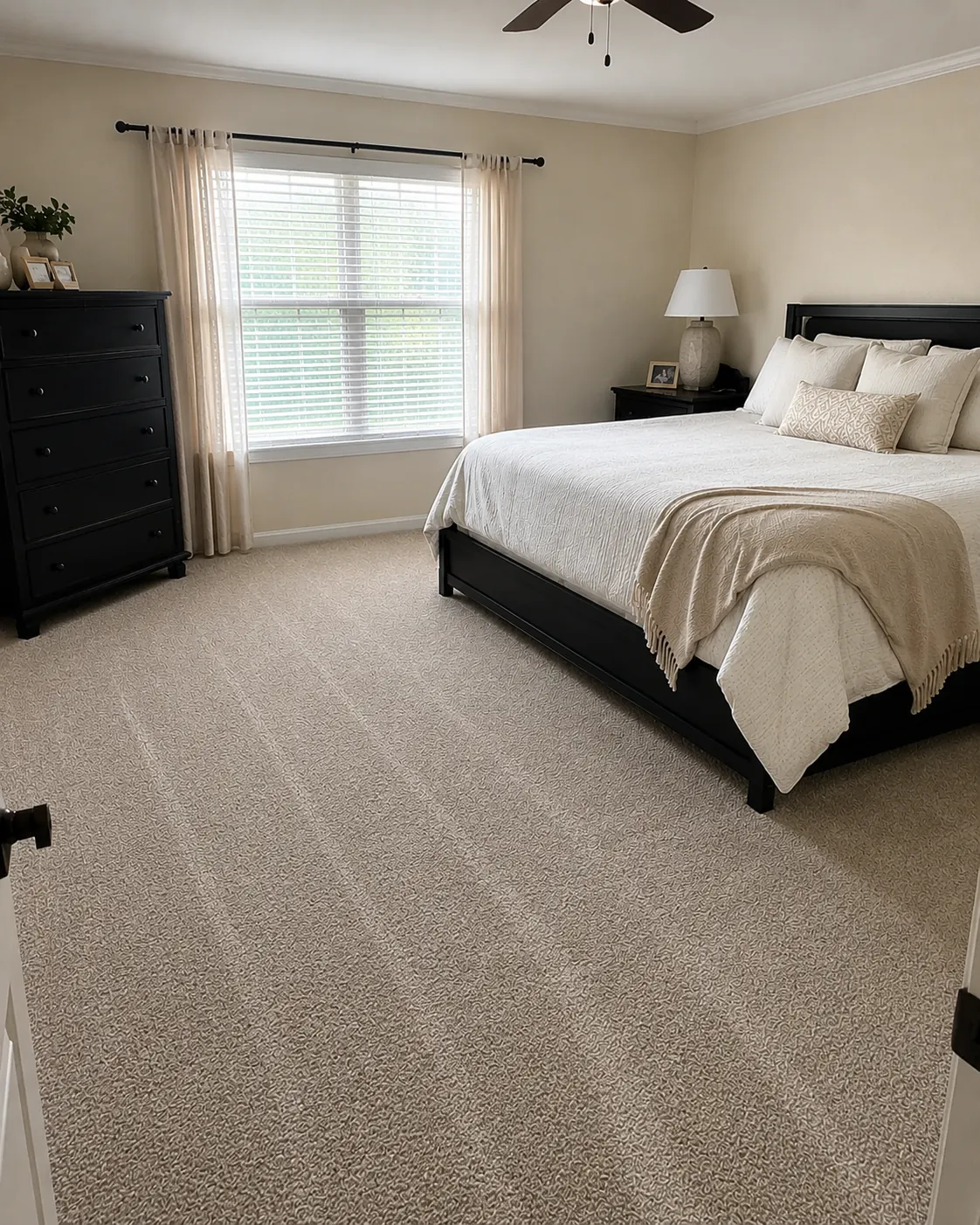

You vacuum the new bedroom carpet, open the canister, and find a soft gray ball of fluff. A day later there is more. It is easy to worry that the carpet is coming apart. In most cases it is not. New cut pile carpet often lets go of short, loose fibers for a while, and that fluff is mostly what you are seeing.
This guide works like a quick symptom check. Find what you see, read the short answer, and know when it is worth picking up the phone.
Where does the fluff come from?
Many carpet yarns are spun from short lengths of fiber, called staple fiber, twisted together. When the yarn is made and the carpet is cut, some short bits never lock into a tuft. They sit loose in the pile until feet and the vacuum lift them out. Wool, shag, and other plush styles tend to show it most. Carpet made from long continuous strands usually sheds less.
Care guides and industry sources describe the shedding as normal and expect it to ease with regular vacuuming. The time it takes varies by carpet. A rough pattern is a few months, sometimes up to about a year. Treat that as typical, not a promise for your room.
Is losing all that fiber shortening the carpet's life?
Not in a way that matters. The canister makes the amount look large because it is packed into one place. Spread across a whole room, it is a small share of the fiber in the carpet. Loose fluff leaving is different from the pile itself thinning out, which is covered in the warning signs below.
Normal or worth a call? A quick table
| What you notice | Usually means | What to do |
|---|---|---|
| Soft fuzz in the vacuum during the first months | Loose fiber left from making the yarn | Keep vacuuming; it should slowly drop off |
| Fluff balls along walls or under furniture | The same loose fiber, pushed aside by foot traffic | Vacuum the edges with a crevice tool |
| One loop or strand standing taller than the rest | Sprouting: a single tuft end worked loose | Snip it level with the pile using scissors |
| Fuzzy, matted look on loop pile | Pilling or fuzzing, often from a brush or beater bar | Check the care guide and adjust the vacuum setting |
| Whole tufts or loops pulling out | Possible product or installation issue | Stop, take photos, contact the seller or installer |
| Bare or thin patches | More than normal shedding | Contact the seller or installer |
| Shedding that stopped, then started again, or keeps going well past a year | Worth a closer look | Contact the seller or installer |
Shedding, sprouting, and fuzzing are not the same thing
- Shedding is loose fluff that collects in the vacuum. It is spread over the whole carpet and fades with time.
- Sprouting is one tuft or loop that pokes up above its neighbors. It can happen on any carpet, new or old.
- Fuzzing or pilling shows up mostly on loop pile. The surface starts to look hairy, often because a spinning brush is roughing up the loops.
Tugging a tall loop or strand can unravel the tuft next to it and start a run. Use sharp scissors and trim it even with the surrounding pile instead.
A simple routine for the first 90 days
Step 1: Read the care guide. Your carpet's maker explains which vacuum settings fit that product. Advice differs. Some guides ask for suction only or a raised brush on wool and shag. Others say a rotating brush is fine for most styles. The guide for your carpet is the one to follow.
Step 2: Test before you vacuum the whole room. Try your vacuum in a closet or behind a door first. If the surface looks fuzzy or rough afterward, raise the brush or turn it off.
Step 3: Vacuum on a regular rhythm and empty the canister often. How often depends on your traffic, pets, and household. A full bin loses suction, which leaves more fluff behind for next time. Over the weeks, you should notice the amount slowly shrinking.
What to tell the installer if something looks wrong
If you see any of the warning signs in the table, a short, clear message helps. Include the room, when the carpet went in, and what you are seeing. Add close-up photos with a coin or ruler for scale. Mention how you vacuum and which setting you use. Keep your receipt, product label, and warranty papers together so the carpet's style and color are easy to look up.
Notice a strong odor rather than fluff? That is a separate issue, covered in our guide on why new carpet smells.
Still choosing a style? Browse carpet for your home to compare the lines we carry.
When you are ready, request a free in-home estimate to see samples in your own light.