
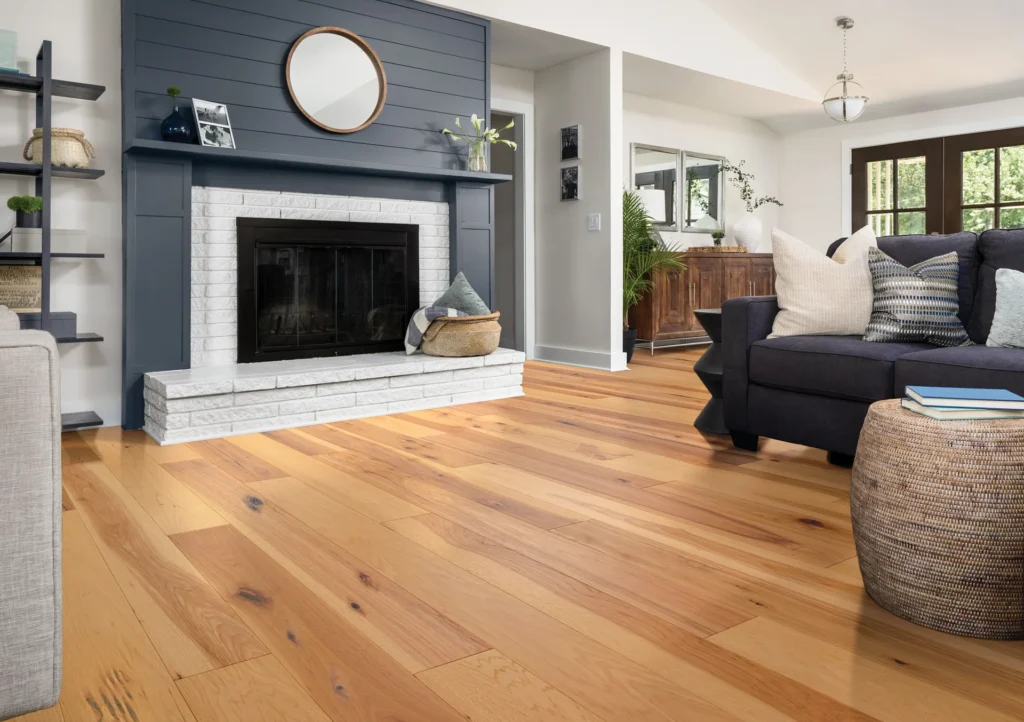

Stand beside a South Jersey sliding door on a clear November afternoon. The bright strip on the floor may reach much farther into the room than it did in July. That moving strip deserves a place in your flooring plan, right alongside the sofa and the doorway. A sunny room asks more of a plank than a shaded hall does.
Yes, luxury vinyl plank can fade or change color in direct sunlight. UV protection may slow that change, but it does not make every floor sun-proof. Many vinyl plank warranties exclude fading or discoloration caused by direct sun. Before choosing a floor for a sunroom or a room with large south- or west-facing windows, read the sunlight rules for that exact product.
Start at the glass, not at the sample rack
Sketch the room on a sheet of paper. Mark the slider, windows, rugs and large furniture. Add an arrow showing which way each window faces if you know. You do not need a precise drawing; you need a place to record where direct sun actually lands.
On a clear day, look at the floor in the morning, around midday and late in the afternoon. Draw the edges of each sun patch and note the time. A west-facing window may leave the room shaded early, then light up the sitting area later. Trees, overhangs and nearby buildings can change the pattern, so window direction alone is not the answer.
- Mark areas that receive direct rays, rather than simply looking bright.
- Note whether a shade was open or closed when you checked.
- Include the narrow strip beside the slider and the floor under glass doors.
- Write down which areas stay shaded beneath furniture or rugs.
This is your sun map. It gives you a better question than 'Is this floor good for bright rooms?' You can describe which part of your room receives direct light, when it happens and what protection you plan to use.
Give the map a summer side and a winter side
In South Jersey, the winter sun sits lower in the sky and can reach deeper through windows. A floor that seems protected during summer may receive direct rays during the heating season. Bare branches can also change the shade around a window. Keep seasonal notes rather than treating one afternoon as the whole year.
Summer brings a separate concern: heat collecting behind glass. Air conditioning may keep the main living area comfortable while the strip beside the window gets much warmer. In winter, the room can still have a sun-warmed patch even while the heat is running elsewhere. Room air and the floor surface are not the same measurement.
If you are choosing flooring now, do not wait for every season to pass. Use what you remember, any room photos you already have and your current map. Tell the person advising you what is uncertain. Ask how to check both room and floor temperatures against the product's written limits, including conditions when the home is empty or the cooling system is off.
A changed shade and a moving joint are different clues
| Room clue | Color fade or discoloration | Heat movement |
|---|---|---|
| The sunny strip looks different from the shaded floor | Light exposure may have changed the finish or color; other causes still need checking | Color alone does not show whether a joint has moved |
| A gap opens or an edge lifts near the glass | Fading does not explain an open joint | Heat may be involved, but installation and subfloor conditions also need review |
| A rug leaves a clear outline when moved | Covered and exposed areas may have aged differently; rug materials can also discolor vinyl | An outline alone is not evidence of expansion |
| The room becomes very hot in direct sun | Long exposure can be a color concern | Check the maker’s indoor and floor-temperature limits before choosing the product |
UV inhibitors and protective layers can slow color change, not necessarily prevent it. A thick wear layer is not proof that a floor is approved for constant direct sun. Our explanation of what the wear layer does covers that spec; ask separately about sunlight performance. Darker colors tend to make changes more noticeable, but a pale plank is not a promise against fading.
Heat works differently. Excess heat can affect plank movement and contribute to gaps or lifting. Some maker guidance warns about long-term indoor temperatures above about 90°F combined with strong direct sun. That is a warning to check your maker's temperature limit, not a universal cutoff or permission to keep every vinyl floor below that number.
If joints are already opening, the guide to gaps between vinyl planks covers the broader diagnosis. Do not assume the window is the only cause, or try to close the joints before documenting the problem and asking for advice.
Break up the rays without forgetting the heat
Blinds, shades and sheers are common maker recommendations for reducing direct exposure. Choose something you can realistically use when the sun reaches the floor, even if you are not home. A covering that stays open all afternoon cannot protect that sunny strip.
UV or solar window film may help reduce color change, depending on the film and the glass. It does not remove heat buildup or replace control of the room's temperature. Ask the window specialist which film suits your glazing, and ask the flooring maker in writing whether the proposed film affects flooring warranty coverage. Do not assume that installing film creates coverage for sunlight damage.
A rug is not a substitute for that plan. The covered area may keep a different shade from the exposed area, creating an outline or a lighter-looking patch when you move it. Rug backing can also cause discoloration on some vinyl, which is a different issue from fading. Follow the floor maker's rug guidance rather than covering the sunniest area with any mat you have.
Let samples spend time where the sun lands
Get samples of the luxury vinyl plank styles you are considering and place them in the sunniest spot for a few weeks. Secure them with tape only where it will not mark an existing finish, following its care guidance; keep them out of walking paths. Leave a matching sample away from direct sun so you have something to compare.
Look at the samples in both daylight and normal room lighting. Photos taken from the same place can help you compare their appearance. A short sample trial is useful homework, not a prediction of years of exposure: no visible change over a few weeks proves neither fade resistance nor warranty coverage.
If the room is mainly for quiet sitting, carpet options for a softer room may be worth a brief comparison. Carpet can also fade in sun, and its care and warranty limits matter too. Switching materials changes the comfort and cleaning trade-offs; it does not erase the need to manage light and heat.
Take these questions back before placing the order
- Does this exact product allow my sunroom's use, including any periods without heating or cooling?
- Where does its written warranty address direct-sun fading or discoloration?
- What indoor and floor-surface temperature limits apply, and how should they be checked?
- Which window treatments are recommended for this exposure?
- Will the proposed window film affect coverage? Please confirm in writing.
- If the same floor continues into a shaded room, how should I plan for possible differences in appearance?
Keep the answers with the product name, installation guide and warranty, not just a general sales description. If your bright room also has in-floor heat, the separate radiant-heat flooring guide addresses that system's approval and surface limits. Sun through glass and heat from below are separate checks, even when they affect the same room.
For an existing floor, photograph color changes and any lifted edges or gaps before rearranging the room. Note the season, shade use and where the sun lands. Contact the seller or installer with those records rather than sanding, coating or trying a color-restoring treatment. A fading concern calls for a different response from a joint that needs inspection.
Your sun map can help turn a sunny-room worry into useful questions about the right floor. Get a free in-home estimate to discuss your space, or call (609) 300-0509.