
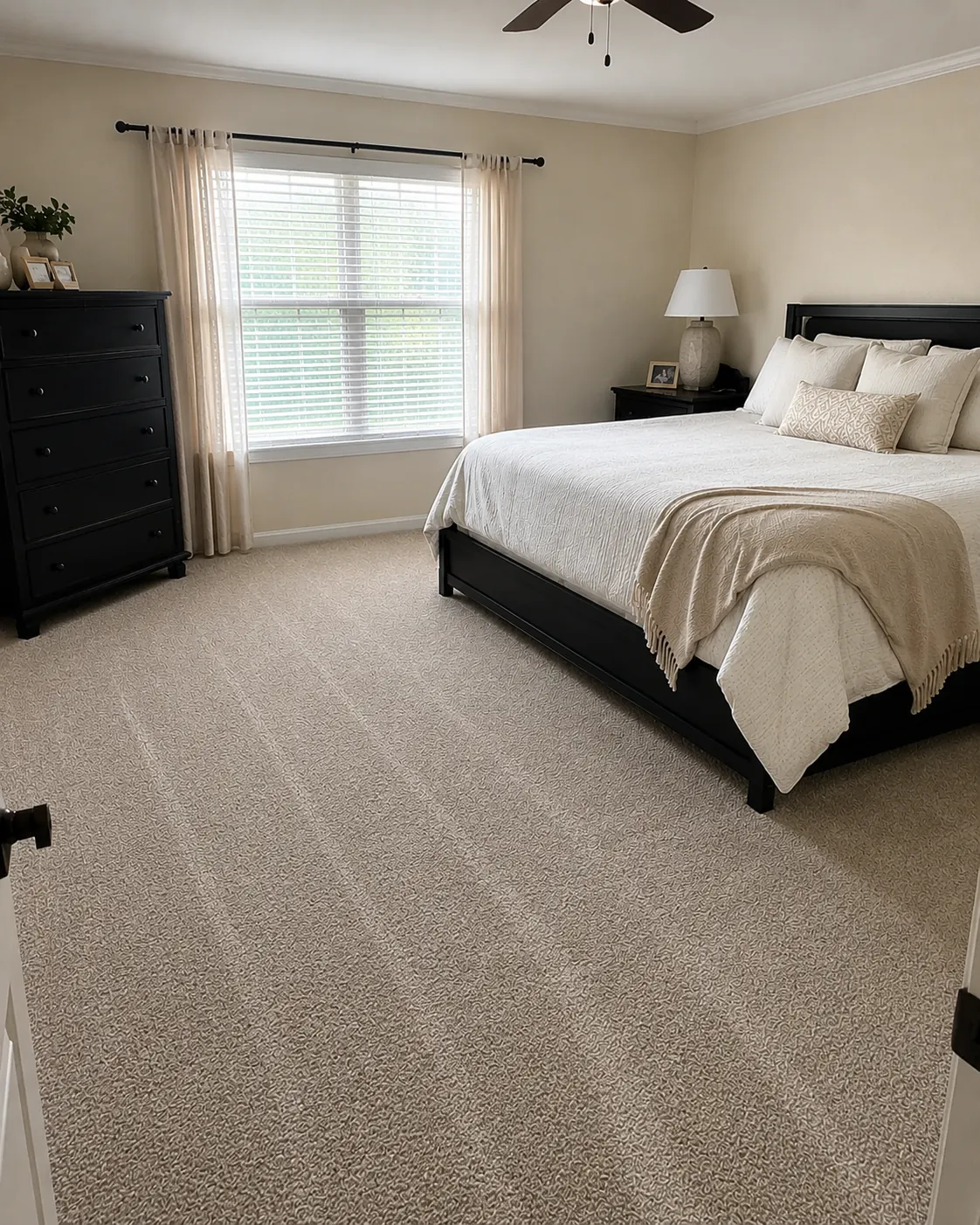

Two carpet samples can share a color and still suit very different lives. One looks smooth after you brush it with your hand. The other keeps a tidy row of small loops. Now picture each beside a bed, across a busy hall, and beneath a desk chair. The choice starts to change before the color does.
For cut pile vs loop carpet, the short answer is comfort versus a more track-hiding surface, with plenty of room between those ends. Cut pile has the tops of its yarn loops sheared off, leaving exposed fiber ends. It usually feels softer and plusher. Loop pile leaves the yarn in uncut loops. It is generally tougher under traffic and hides footprints and signs of wear well. Neither label tells you everything about the finished carpet.
This comparison is for choosing new carpet, not fixing damage in an existing floor. Use it to narrow your samples room by room. Then let the exact carpet's construction, care guide and written warranty settle the details. A category can point you in a useful direction; it cannot promise how any one sample will perform.
Compare the surface before choosing the room
| Style | What you feel and see | Trade-off to check |
|---|---|---|
| Smooth cut pile, often called plush or Saxony | Soft, even-looking pile with exposed ends | Footprints and vacuum tracks tend to show most |
| Textured cut pile, including twisted frieze | A less uniform surface that can feel soft without looking perfectly smooth | Check pile height, density and how easy it is to clean |
| Loop pile | Uncut yarn loops, often with a firm, tidy feel | Claws and sharp objects can catch a loop |
| Cut-and-loop | Cut ends and intact loops form a pattern | The design may hide tracks, but its loops still need a snag check |
Smooth plush and Saxony styles are the ones to inspect closely if you dislike foot marks. Pile bends under a step and catches light in a new way. A vacuum can leave bands for the same reason. Those marks do not by themselves mean the carpet is worn out. They may simply be part of the look you are buying.
Frieze is a twisted cut style. Its less even surface helps break up the look of tracks. Other textured cut styles can offer a similar visual compromise: exposed ends for comfort, without a perfectly smooth field that records each step. Compare the actual samples rather than treating every carpet called 'textured' as the same thing.
Loop pile often keeps a neater-looking surface in busy spaces. But a loose, tall loop is not the same as a dense, low loop, and tough does not mean snag-proof. Cut-and-loop mixes both surfaces to make a design. It can be a middle ground for looks, not a way to remove every drawback of either style.
Give each room a verdict, not the whole house
Consider a hypothetical home with children, a dog, upstairs bedrooms and a desk used most days. The table gives starting choices, not product approvals. Change the verdict when your room's real use differs. A living room used only for quiet reading is not the same test as one used for games, snacks and a dog bed.
| Room and household use | First samples to compare | What could change the verdict |
|---|---|---|
| Bedroom: bare feet and quiet evenings | Smooth or textured cut pile for a softer feel | Choose texture over smooth plush if tracks bother you |
| Living room: children and a dog share the floor | Dense textured cut, such as frieze | Claws make intact loops a concern; check cleaning guidance too |
| Hallway: repeated trips along one route | Dense low loop alongside a compact textured cut | Pets, seam locations and the specific carpet rating matter |
| Stairs: the same tread edges take each step | Low loop and dense short cut samples rated for stairs | Ask how loops or patterns work around the stair shape |
| Dry finished basement: play, hobbies or a desk | Low loop or textured cut suited to the intended use | Dampness must be resolved before either carpet is chosen |
| Home office: a chair rolls back and forth | Low loop or short dense cut with an approved protection plan | Check chair-mat needs and whether rolling use is allowed |
Start with the room that has the strictest need. In this household, that might be the dog’s main route or the stairs. If one carpet will continue through several rooms, compare it against that harder use first. A soft bedroom sample that fails your stair or pet check should not win just because it feels good in your hand.
Using more than one style can make sense, too. You might prefer a soft cut in bedrooms and a lower, firmer surface by the desk. Ask how the change will finish at the doorway. If matching the whole upstairs matters more than having the softest bedroom pile, choose a compromise you can live with in both places.
Bedrooms and living spaces: decide how much tracking you accept
A bedroom is often a good place for cut pile because softness matters where you get out of bed or sit on the floor. Smooth plush can suit someone who likes that finished look and does not mind seeing the route to the closet. Textured cut is worth placing next to it when you want less visible tracking.
In a living space, think about how the floor is used rather than how formal the furniture looks. A room where children build on the floor calls for a different balance from a seldom-used sitting room. Some cut constructions can mat or shed; others hold their texture better. Density, twist and the rest of the build matter alongside the pile label.
Do not confuse hidden marks with no wear. A texture may make a walked-on area less obvious while still needing the same care. For a closer look at shade and lighting, the guide to carpet colors that hide everyday dirt covers visual contrast rather than construction. Keep that choice separate from whether the pile suits your household.
Halls, stairs and work areas: firm does not automatically mean fit
Loop is often suggested for hallways because its surface can hide tracks along a repeated walking route. A dense textured cut remains worth comparing, especially if claws are part of that route. Ask whether the exact carpet is suited to the traffic you describe. 'Loop' on the label is not a substitute for a use recommendation.
On stairs, the carpet has to work around tread edges, turns and any open sides. Ask whether the product is approved for stairs and whether its pattern will look right as it bends and is cut. Keep installation questions with the person fitting it; this is not a reason to try stretching or trimming a sample into place yourself.
A basement choice starts with the condition of the space. Loop may be a practical surface in a dry finished room used for hobbies or games. Neither loop nor cut pile solves a damp slab, leak or ongoing musty condition. If moisture is uncertain, have it checked before choosing carpet based on traffic alone.
For a home office, a low surface may be easier to live with under a desk than deep plush. Still, a rolling chair applies repeated stress in one small area. Check the carpet's use limits and the chair-mat guidance before buying. A mat must suit the carpet and sit securely; being loop pile does not make direct rolling harmless.
Pets and children can overturn the neatest room chart
Pets with claws can catch intact loops. That includes loops within a cut-and-loop pattern, even if most of the sample feels plush. A cat that scratches the floor or a dog that digs at a resting spot makes this more than a minor detail. Dense textured cut, such as frieze, is a practical alternative to put beside the loop sample.
That alternative is not pet-proof. Cut pile can still collect hair, flatten, stain or be damaged. Nail care and a realistic cleaning plan matter with either surface. Our broader guide to flooring choices for homes with dogs compares materials; here, the decision stays on whether exposed ends or intact loops better suit the way your pet uses carpet.
For children, separate comfort from cleanup. A soft surface may be welcome for floor play, while texture can make daily tracks less noticeable. But the pile category does not tell you whether a spilled drink will leave a stain. Read the exact care instructions and coverage rather than assuming a busy-room recommendation includes every sort of accident.
Also consider toys or furniture with rough edges. Anything that catches yarn can damage a loop, and a sharp edge can harm cut pile too. Your goal is not to find a floor that needs no attention. It is to choose a surface whose likely weak points fit the way you can care for the room.
Use three minutes to compare samples without damaging them
Try this short routine on samples you have permission to handle. It is a way to compare feel and appearance, not a lab test or a forecast of years of wear. Put them on a clean, stable surface, away from stairs and walking paths. Do not scratch an installed floor or pull a yarn to see how far it runs.
- First minute — touch: brush the surface with a flat hand in both directions. Compare softness and how easily the pile changes shade. Gently press with your palm, then release; note the feel without treating it as a long-term resilience test.
- Second minute — marks: gently scuff with a clean hand or clean sock, then smooth the area. Look for tracks you would find annoying across a room. Keep grit, dirty shoes and hard rubbing off the sample.
- Third minute — light and loops: view from the window side, then from the doorway. Look closely for raised loops or loose yarn. If the owner permits it, lightly glide a smooth fingernail across the surface to notice catches; never hook or tug a loop.
Leave keys out of the routine. Their teeth and sharp edges can snag or cut yarn, turning a comparison into damage. A snag check means noticing exposed loops and asking how vulnerable they are, not deliberately ripping one. Do not use a pet's paw as a test either. A small sample cannot reproduce a running dog or a rolling office chair.
Write one sentence beside each sample: 'Soft enough for the bedroom, but tracks bother me,' or 'Tidy in hall light, but loops worry me with the cat.' These are example notes, not performance claims. They keep you from choosing only by a showroom touch and forgetting the room where the carpet will live.
If you want to narrow your first set of samples, explore the carpet flooring options and compare the surfaces in your own light. Use color, touch and household use together. A beautiful pattern that catches your eye should still pass the practical questions for that room.
Ask the installer about the parts a sample cannot show
A small square does not show a full-room seam or a pattern carried down stairs. Loop rows and cut-and-loop designs can make alignment important. Ask for an explanation before ordering, not a promise that every join will disappear. The separate guide to making carpet seams less visible goes deeper into light, placement and the difference between a visible line and a repair issue.
- Where would the seams sit with this exact loop or patterned carpet, and how might they look from the doorway?
- How will the pattern and pile direction continue around landings, turns and stair edges?
- What fitting method does the maker require, and how are the loops or pattern kept aligned during stretching and cutting?
- Is this carpet suited to the stair use, pet activity or office-chair use we have described?
- Which care tools are allowed, and which kinds of snagging, flattening or appearance change does the written warranty address?
Padding is another separate check, not a reason to assume a softer pile needs a softer base. Use the guide to choosing padding under carpet for that topic, then ask which pad meets the exact carpet's requirements. Keep the pile choice focused on surface feel, visible tracks and household use.
Choose the trade-off you would still accept on a busy day
If you want a smooth, cozy bedroom and can live with visible steps, start with plush cut. If softness matters but tracks bother you, compare textured cut or frieze. If a tidy-looking traffic surface matters most and claws are not a major concern, low loop deserves a look. If pattern is the draw, examine cut-and-loop with its intact loops in mind.
No style is maintenance-free. Follow the maker's vacuum and cleaning guidance, deal with spills as directed and avoid pulling loose yarn. Loop may hide footsteps while still needing soil removed. Cut pile may feel soft while still needing care to preserve its appearance. Pick the carpet you can maintain, not the category that sounds as if it will do the work for you.
Note where you want softness, where tracks would bother you and where claws or chair wheels meet the floor. Request a free in-home estimate to discuss those choices, or call (609) 300-0509.