
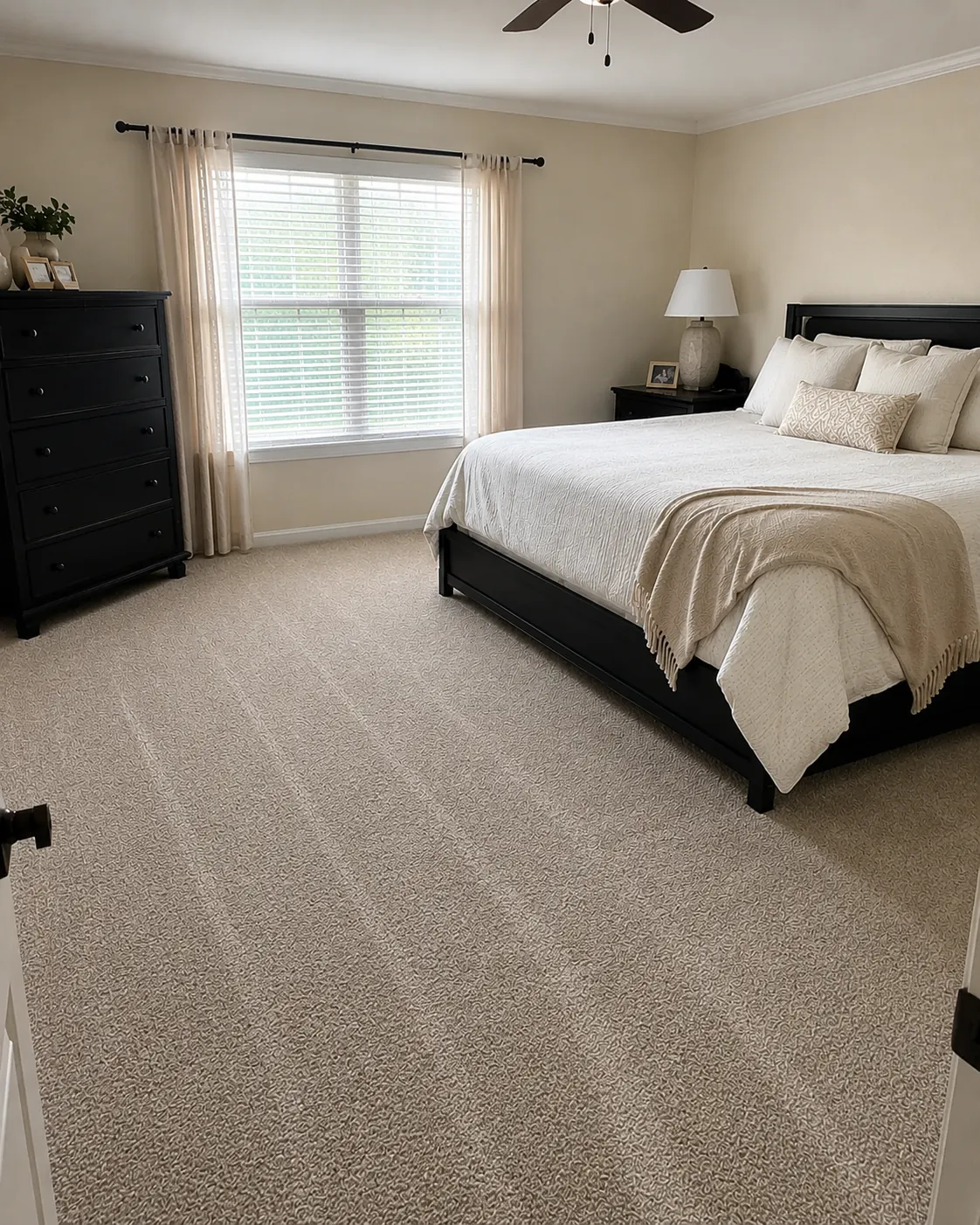

When homeowners shop for carpet, almost all the attention goes to the carpet itself — the color, the fiber, the feel. But there is a second half of the job hiding underneath, and it has more to do with how your carpet performs than most people realize. The pad decides how the floor feels underfoot, how long the carpet lasts, how loud the room is, and whether a pet accident becomes a permanent problem. Here is what we actually recommend, and why.
The short answer
For most homes in Camden, Burlington, and Gloucester counties, the right pad is a rebond pad around 8-pound density, no thicker than 7/16 of an inch, with a moisture barrier. It is the workhorse: firm enough to keep the carpet from flexing and wearing out, soft enough to feel good, and cheap enough to leave money in your budget. The exceptions come down to the room and the carpet you choose.
Why the pad matters more than people think
- It takes the beating. Every step lands on the pad first. A good pad absorbs the shock; a bad one lets it pass through to the carpet backing, which breaks down faster.
- It holds the carpet in place. Dense pad keeps the carpet from flexing and stretching, which is what causes wrinkles and ripples a few years in.
- It buys you back quiet. A quality pad noticeably softens footsteps and echoes, especially on a second floor.
- It insulates the room. Pad adds a layer of warmth underfoot in winter and helps with sound between levels.
- It is part of your warranty. Most carpet manufacturers name the pad requirements right on the warranty. Use the wrong one and you may have quietly voided your coverage.
The main types of pad
- Rebond. Made from reclaimed foam, compressed into sheets. The best value for most homes — look for 8-pound density. This is our default recommendation.
- Prime urethane foam. New foam rather than reclaimed, with a very consistent feel. Sits a step above rebond in comfort and price.
- Memory foam. The softest, most comfortable option, and the priciest. Lovely in a bedroom; too soft under heavy traffic.
- Fiber pad. Made of carpet fibers. Flat and firm — the right call under loop-style carpets like berber, where soft pad causes flex and wear.
- Rubber pad. Dense and extremely long-lasting, common in commercial work. Overkill for most residential rooms, but the top performer in any traffic.
The two numbers that matter
Density is how many pounds of foam fill one cubic foot. A 6-pound pad is the bare minimum most warranties allow; an 8-pound pad is noticeably firmer and keeps carpet looking newer, longer. Thickness matters in the opposite direction from what people expect: more than 7/16 of an inch is too much. A pad that is too thick lets the carpet flex deeply with every step, and that flexing is exactly what wears out carpet backing and creates ripples. Firm beats thick, every time.
Match the pad to the room
- High-traffic areas — hallways, stairs, family rooms: firm 8-pound pad, and keep it thin. Stairs especially need a firm pad at the nose, where every step lands.
- Bedrooms: comfort rules here, so a softer or memory foam pad is fine. A pad upgrade is the cheapest way to make a bedroom carpet feel plush.
- Basements and lower levels: the moisture barrier is non-negotiable. Concrete slabs carry dampness up, and pad without a barrier traps it against the carpet backing.
- Homes with kids or pets: spend on the moisture barrier, not on plushness. It keeps accidents at the surface where you can clean them up.
One warning about very soft pads
A pad that is too soft or too thick feels wonderful in the showroom and disappoints within a year or two. The carpet sinks, flexes, and wrinkles, and the wear line down the hallway arrives early. If a salesperson leads with "extra-thick luxury pad," ask what density it is and what the carpet manufacturer allows. Density first, thickness second — and always under the carpet’s warranty limit.
How we quote it
Our estimates list carpet and pad as separate line items, so you can see exactly what the pad costs and what it buys you. Most of the time a quality rebond pad adds very little to the job and changes the whole feel of the carpet. If a quote you got anywhere lumps the pad in invisibly, ask what is actually going under it.
We bring carpet and pad samples to your home so you can compare them in the rooms they will go in — firm versus soft, with and without a moisture barrier. Free in-home estimates across South Jersey; call (609) 300-0509 or request a free estimate online.