
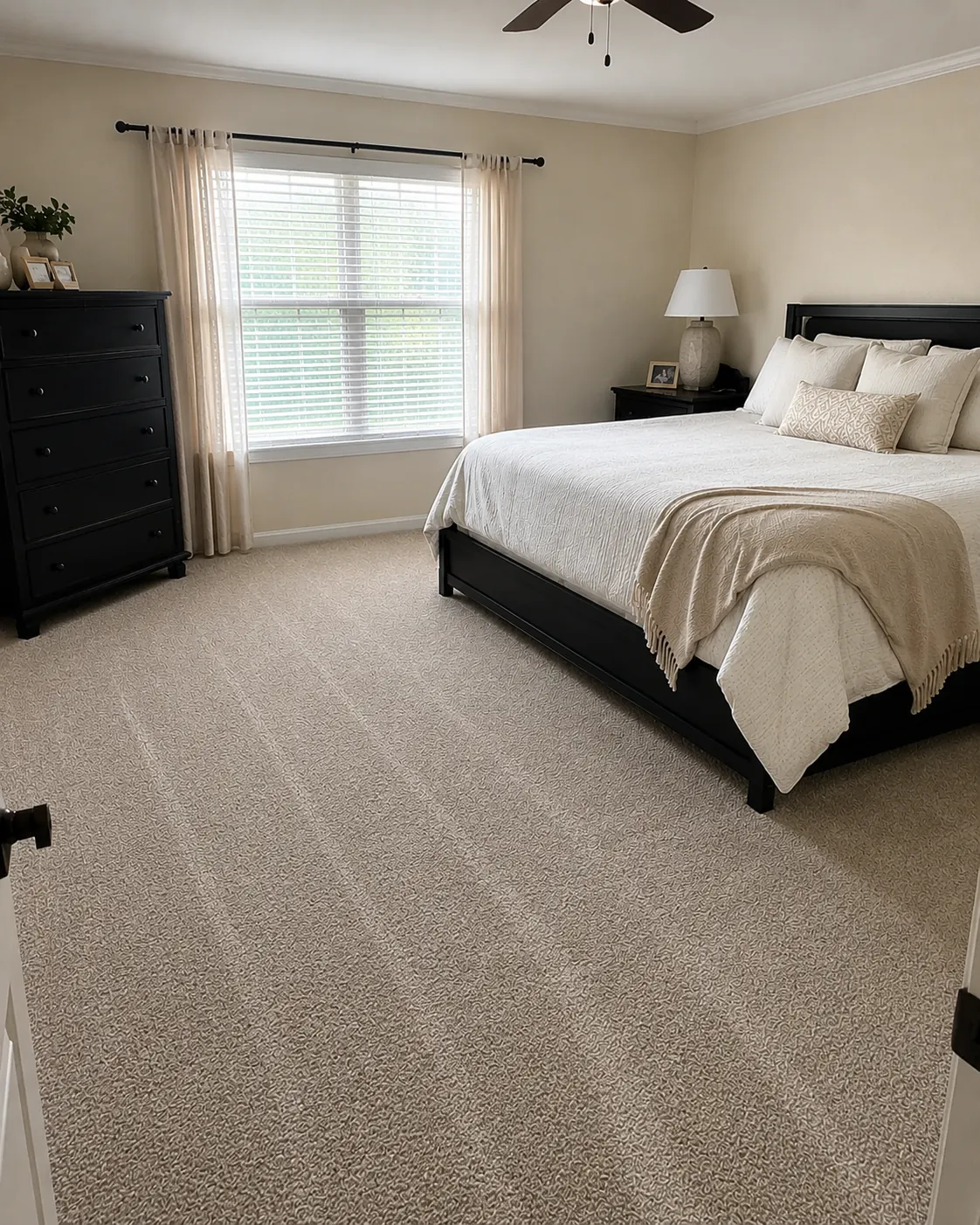

The crew packs up, you walk into the bedroom barefoot, and the carpet feels great. Then you breathe in. There is a sharp, slightly sweet, plastic-like odor that was not there this morning. Most people wonder two things right away: is this normal, and how long will it hang around? Here is the short answer. A chemical scent from brand-new carpet is common, it is strongest at the start, and it usually fades on its own. The rest of this guide walks through what you are smelling, what to expect as the days pass, and the few signs that point to something else.
What that smell actually is
New carpet gives off small amounts of gases called volatile organic compounds, or VOCs. This is often called off-gassing. The odor does not come only from the soft fibers you walk on. The backing and the latex that holds it together, the padding underneath, and any glue used on a glue-down job can all add to it. In some rooms, the pad and adhesive put out as much odor as the carpet face itself.
That matters because it changes where you look when a room smells stronger than you expected. Two rooms with the same carpet can smell different if one has a different pad or was glued instead of stretched over tack strip.
Day 1: the strongest stretch
The first day or two is when you will notice it most. The odor is usually at its peak somewhere in the first 24 to 72 hours. A closed room, a warm afternoon, or a sticky, humid day can make it seem stronger, because warmth and moisture speed up how quickly those gases leave the materials.
What helps right now:
- Open windows in the new room and nearby rooms if the weather allows.
- Set a box fan in a window facing out, so it pushes indoor air outside instead of just stirring it around.
- Run bathroom and kitchen exhaust fans to keep fresh air moving through the house.
- Keep interior doors open so the room is not sealed off.
- If you can, sleep in another room the first night or two while the bedroom airs out.
A common rule of thumb, in line with indoor air guidance from the EPA, is to keep fresh air flowing for at least about 72 hours after installation.
Week 1: noticeably softer
By the end of the first week, most homes notice a real drop. You may still catch it when you first walk into a room that was shut all day, but it should not fill the space the way it did at first. Keep airing the room when you can, and vacuum normally. Vacuuming does not remove VOCs, but it does pick up loose fibers and dust from the install.
Week 4: usually just a faint trace, if anything
For most rooms, the smell typically fades over a few days to a few weeks. Some people can still pick up a faint trace after that, especially in a closet or a room that rarely gets fresh air. How long it lasts truly varies from home to home. Ventilation, the season, the pad, and the install method all change the timeline, so do not worry if a neighbor says theirs disappeared faster.
Which smell is it? A quick check
Not every odor after new flooring is off-gassing. A chemical scent and a musty one are different problems with different fixes, and mixing them up can mean waiting on something that will not go away by itself.
| What you notice | Likely cause | What to do |
|---|---|---|
| Sharp, plastic-like, or sweet chemical scent that is strongest at first and weakens each day | Normal off-gassing from carpet, backing, pad, or glue | Ventilate and give it time |
| Musty, earthy, or damp-basement scent | Moisture: a damp slab, wet pad, a leak, or high humidity | Call the installer and look for the water source |
| Sour smell that gets stronger on humid days | Moisture or an old spill trapped below, often in the subfloor | Have the area checked; do not just cover it with air freshener |
| Pet or urine odor in a room with brand-new carpet | Old accidents in the subfloor that were not sealed | Ask about cleaning or sealing the subfloor |
| Chemical scent that is not fading at all after a few weeks | Poor airflow, a strong-smelling adhesive, or another source | Call the installer to talk it through |
When to call instead of waiting
Waiting is the right move when the odor is clearly chemical and gets weaker as days go by. Reach out to your installer if you notice any of these:
- A musty or mildew odor, especially in a basement or on a concrete slab.
- Carpet or padding that feels damp, cool, or squishy in one spot.
- A smell that grows stronger over time instead of weaker.
- Odor that seems to come from one corner or seam rather than the whole room.
If anyone in your home feels unwell or has symptoms that worry you, talk to a doctor. Flooring advice is not a substitute for medical advice.
Planning around South Jersey seasons
Timing makes a difference here. In spring and fall, most homes can keep windows open for a few days without much trouble, which makes airing out easy. In July and August, humid air and closed-up houses running air conditioning can make the odor feel heavier, though fans in windows and exhaust fans still help. In the middle of winter, windows usually stay shut, so plan on running exhaust fans and cracking a window for short stretches during the warmest part of the day.
If you are flexible on dates, an install during a mild-weather week can make the first few days easier. It is not a must, just one more thing to think about when you pick a date.
Babies, pets, and sensitive noses
If your household includes a newborn, someone sensitive to odors, or pets that spend a lot of time on the floor, a little planning goes a long way:
- Install the nursery or main bedroom first, so it has the most time to air out before anyone sleeps there.
- Keep pets out of the freshly carpeted room for the first day or two while windows and fans are running.
- If you can, schedule the work for a weekend when family members can stay with a relative or spend the day out.
- Ask for paperwork on the products before you buy so you can review the details yourself.
If allergies are your bigger concern, our guide to the best flooring for allergies covers dust, dander, and cleaning routines in more detail.
Questions to bring to your estimate
- Does this carpet or pad carry a low-emission label, such as the Carpet and Rug Institute Green Label Plus program? Can I see the paperwork?
- Will this job be stretched over tack strip or glued down?
- If it is glued, is a low-VOC adhesive available?
- What pad are you recommending, and why?
- Will you check the slab or subfloor for moisture before installing?
You can see the styles and fibers we install on our carpet flooring page, and bring any of these questions to your appointment.
We will walk your rooms, check for moisture, and talk through pads and install methods with you. Schedule a free in-home estimate or call (609) 300-0509.