
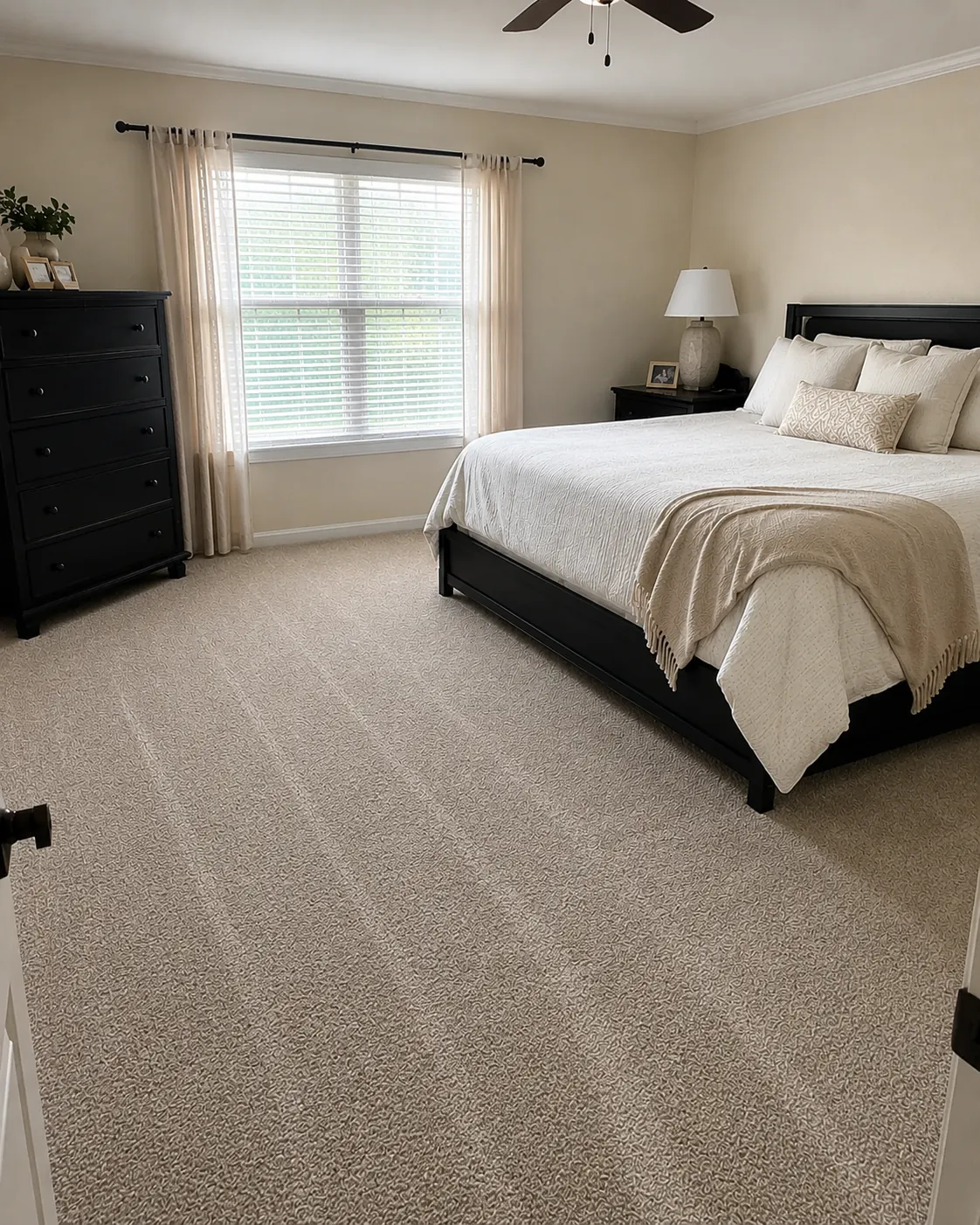

Cream carpet can make a room feel bright until a muddy shoe crosses it. Charcoal may conceal that same mud yet turn a pale pet hair into a sharp little line. Neither color wins every test. The carpet that looks cleanest between vacuuming sessions is usually the one that creates the least contrast with your household’s everyday mess.
For a useful starting point, compare mid-tone taupe, tan, medium gray, and warm mid-brown. These shades sit between pale debris and dark soil, so neither stands out as strongly as it would against white or near-black. Add a subtle mix of yarn colors and some surface texture, and the floor is often more forgiving. That is a visual advantage, not permission to leave dirt in the fibers.
What shows what: the color-family trade-offs
| Color family | Often blends in better | More likely to stand out |
|---|---|---|
| White, ivory, and pale cream | Pale lint and light-colored pet hair | Dark shoe soil, mud, food marks, and dirty traffic paths |
| Tan and mid-tone taupe | A mix of light dust and brown tracked-in soil | Very dark spills or bright, strongly colored stains |
| Medium gray and greige | Mixed everyday debris without a stark light-dark backdrop | Pale hair on deeper shades; warm-colored food or mud marks |
| Warm mid-brown | Brown yard soil and darker crumbs | White lint, pale fur, and light powdery debris |
| Charcoal, dark brown, and near-black | Dark soil and some dark marks | Light dust, lint, pale pet hair, and light crumbs |
| Flecked or multi-tone neutrals | Small mixed-color specks and minor uneven marks | Larger spills or stains that contrast with the whole blend |
Read the table as a comparison, not a stain-resistance rating. Color cannot stop a drink from soaking in or protect a fiber from the wrong cleaner. A pale carpet with suitable stain protection can be easier to clean than a dark carpet without it, even though it shows a dirty spot sooner. Keep appearance and cleanability as separate questions when comparing samples.
Mid-tones versus the two extremes
Taupe and tan are useful where shoes bring in brown soil but the room also collects lint. Medium gray can suit a home with mixed debris and cooler furniture colors. Warm mid-brown makes sense where yard traffic is the main problem. None hides every mess; each lowers the contrast of some common ones without making the opposite type quite so obvious.
Cream and white reward careful shoe habits and prompt spot cleaning. They are reasonable choices for a quiet space if brightness matters more than concealing marks. In a busy hallway, however, the gap between a clean edge and a soiled walking path can become hard to ignore.
Very dark carpet offers the reverse bargain. Brown dirt may be less noticeable, but pale crumbs and dust become easier to spot. A household with a light-haired dog can end up vacuuming more often for appearance alone. Pick the shade against the debris you actually find on your current floor, rather than assuming darker always means easier.
A blended yarn changes the view; pile changes the shadows
Flecked, tweed-like, and multi-tone yarns break up a uniform field of color. A small speck has less visual contrast when the carpet already contains small changes in shade. A quiet blend can provide that effect without a bold pattern. Look at the sample from standing height: a blend that looks busy close up may read as a calm neutral across a room.
Footprints and vacuum stripes are a different issue. Fibers bent toward you catch light differently from fibers bent away, producing lighter and darker patches even when the carpet is clean. This is a pile-direction effect, not proof that the color failed or that the floor needs shampooing.
Smooth cut-pile plush, especially in a dark solid shade, tends to make those changes more visible. Textured cut piles and level loops generally make temporary tracks less obvious because the surface is less uniform. A textured mid-tone is often a better comparison sample for someone who dislikes seeing every footstep. Check the actual construction rather than relying on a color name or a room photograph.
Gently brushing or vacuuming in the pile’s natural direction can usually even out temporary shading; the next walk across it may change the look again. Persistent pooling or watermark-like patches can be permanent pile reversal, while traffic tracking may involve lasting wear. Ask how the product warranty treats those conditions before buying. Do not assume a darker patch is dirt or promise yourself that cleaning will remove it.
Room-by-room picks, with the trade-off left visible
| Room | A practical first sample | What to compare beside it |
|---|---|---|
| Carpeted entry or hall | Flecked taupe or warm mid-brown with texture | A medium gray; compare how each handles your shoe soil and lint |
| Family room | Multi-tone tan, greige, or medium gray | Your pet’s hair color and the contrast of common snack crumbs |
| Bedroom | A soft mid-tone neutral; lighter shades if traffic is low | Cream against taupe in bedside lighting, plus how much shading you accept |
| Stairs | A textured medium neutral in a stair-suitable construction | How the sample looks bent over an edge and viewed from above and below |
An entry or hall needs more than camouflage. Shoes can carry sand and muddy yard soil during wet seasons in South Jersey, so a mat, a place to remove shoes, and regular vacuuming still matter. If that spot stays wet, decide whether carpet belongs there at all before choosing its shade. Hiding damp dirt does not make carpet water-resistant.
For a family room, start with the pet and snack comparison rather than the wall paint. Pale fur favors a lighter mid-tone over charcoal; dark fur may steer the choice deeper. Where food spills are common, compare care instructions and stain protection alongside color. Even a well-blended surface will reveal a large spill that clashes with its yarns.
A bedroom allows more freedom when shoes and food stay outside. You might accept visible vacuum lines for a smoother plush feel, or prefer texture for a more even view each morning. Our bedroom carpet guide covers comfort and construction in more depth; use this color comparison to narrow the shades without repeating the whole buying decision.
Stairs add a change in viewing angle and concentrated foot traffic. Put the sample over an edge to see how its color and surface look on a curve. A forgiving shade does not replace a construction approved for stairs, a secure installation, or care that removes grit from the treads.
Loose fibers are not the same thing as a dirty color
Some new carpets, particularly those made with staple fibers, shed loose fibers during the early weeks. Continuous-filament products may shed much less, so this is not a rule for every carpet. Loose pale fibers can be easy to see against dark carpet or dark furniture. Vacuum as directed by the carpet maker, with the approved settings for that pile, rather than scrubbing at the surface.
Ask about the yarn type if early shedding concerns you. Keep the care sheet, and report unusual ongoing fiber loss rather than treating it as normal forever. Choosing a darker shade does not itself cause shedding; it can simply make loose material more noticeable.
The final comparison belongs under your own lamps
A showroom’s light cannot settle the choice for a room at home. Place two or three samples on the floor beside the sofa, near the doorway, and under the lamps. Compare them in morning daylight and again in the evening. Move each sample between brighter and dimmer areas, then turn it around to see the pile from the other direction.
Lay a clean sample beside a little of your pet’s brushed hair or a few dry crumbs, without rubbing debris into it. Look from the doorway as well as directly above. That simple contrast test tells you more about everyday appearance than a tiny swatch held against a wall. Keep spills off samples unless the supplier specifically allows a stain test.
Browse our carpet collections to choose styles worth comparing, then judge their color and texture together at home. The strongest candidate is not necessarily the lightest, darkest, or most patterned; it is the one whose compromises fit the room you use.
J&J brings carpet samples to your home so you can compare shades under your own lighting. Arrange a free sample-and-estimate visit or call (609) 300-0509 to put taupe, gray, and brown side by side in the rooms that matter.