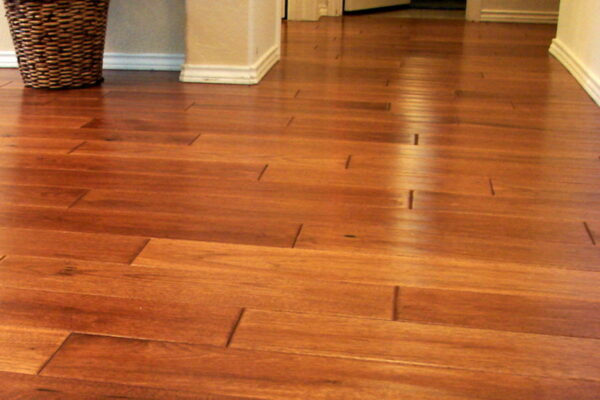

This is the single most common debate we walk into. Somebody wants hardwood because it’s hardwood. Somebody else has read that luxury vinyl is waterproof and bulletproof and half the price. Both people are partly right.
J&J Flooring installs luxury vinyl and we refinish hardwood, so we genuinely don’t care which one you pick. What follows is what we’d tell a neighbor.
The sixty-second answer
- Choose hardwood if you plan to stay ten-plus years, the room is above grade, you want a floor that can be sanded and changed later, and you’re in a neighborhood where buyers expect wood underfoot.
- Choose luxury vinyl plank if you have dogs, young kids, a basement or a slab, a tight budget, or a kitchen and mudroom that see wet boots from November to March.
- Choose both. Wood in the living and dining rooms, vinyl in the kitchen, mudroom, and basement is the most common layout we install, and it’s not a compromise. It’s just putting the right material where it earns its keep.
Wear layer is the number that actually matters
Luxury vinyl is sold on plank thickness, which is mostly marketing. The number to ask about is the wear layer, measured in mils — thousandths of an inch — and it’s the clear layer sitting on top of the printed design.
- 6 to 12 mil: builder grade and rental grade. Fine for a guest room. It will not survive a labrador.
- 20 mil: the sweet spot for a family home with kids, pets, and a real amount of traffic.
- 28 mil and up: commercial rated. Overkill for most houses, worth it for a home office with a rolling chair or a busy entry.
A 12mm plank with a 6 mil wear layer will scratch faster than a 5mm plank with a 20 mil wear layer. Thickness affects how solid the floor feels and how well it hides subfloor imperfection. Wear layer affects how it looks in year eight.
Core type: SPC versus WPC
Rigid core vinyl comes two ways. SPC — stone plastic composite — is denser, harder underfoot, more dimensionally stable in temperature swings, and better over concrete or in a sunroom. WPC — wood plastic composite — is a little softer and warmer to walk on and quieter, which people notice in bedrooms.
For South Jersey basements and anything over a slab, we lean SPC almost every time. The temperature swing between a July afternoon and a January morning in an unheated space is exactly the condition that makes a less stable core gap at the seams.
The refinishing math
This is hardwood’s real argument, and it’s a good one. Three-quarter-inch solid hardwood can typically be sanded and refinished four to six times over its life. That’s roughly a century of floor if nothing catastrophic happens.
Luxury vinyl cannot be refinished at all. When it’s worn out, it comes up and a new one goes down. Plan on fifteen to twenty-five years for a quality product in a normal household, less if you’ve got a big dog and a sunny south-facing room.
| Hardwood | Luxury vinyl plank | |
|---|---|---|
| Installed cost | $8 – $16 per sq ft | $5 – $12 per sq ft |
| Lifespan | 40 – 100 years with refinishing | 15 – 25 years |
| Refinishable | Yes, 4 – 6 times | No |
| Below grade | No | Yes |
| Scratch repair | Sand and recoat the area or whole floor | Replace individual planks |
| Underfoot feel | Warm, solid, natural | Slightly softer, quieter, more uniform |
Water, and the thing nobody tells you
Luxury vinyl is waterproof. The floor system is not. Water that sits on the surface won’t hurt the plank, but water that finds its way through the seams sits on your subfloor, and plywood doesn’t care that your planks were waterproof. A dishwasher leak under a floating vinyl floor still becomes a subfloor problem.
What waterproof really buys you is time and everyday forgiveness. Spilled dog bowls, wet boots, a kid with a juice box, a bathroom that gets steamy. That’s where vinyl beats wood outright, and it’s why we put it in almost every kitchen and mudroom we touch.
Resale in South Jersey
In Moorestown, Haddonfield, Collingswood, and the older parts of Mount Holly, buyers walk in expecting wood on the main floor. Original hardwood that’s been properly refinished is a selling point people mention out loud at showings.
In newer Mount Laurel and Sicklerville developments, a good luxury vinyl floor reads as a clean, current update and nobody blinks. Different housing stock, different expectations. If you’re planning to sell within two years, match the street.
Pets and kids, honestly
Dog nails scratch hardwood. There’s no finish that makes this untrue, though a matte or wire-brushed finish hides it far better than a gloss, and oak hides it better than maple because the grain is busier.
Vinyl handles claws better but is more vulnerable to something most people never consider: grit. Sand and driveway salt tracked in on shoes act like sandpaper on a wear layer. A real entry mat and a no-shoes habit will add years to either floor, and that’s free.
Room by room, what we actually recommend
- Living and dining rooms, above grade: hardwood if the budget allows, otherwise a 20 mil vinyl.
- Kitchen: luxury vinyl, nearly always.
- Bathrooms and laundry: luxury vinyl or tile. Choose a floor suited to wet rooms.
- Bedrooms: either. Carpet still wins on comfort for a lot of families, especially upstairs where footsteps carry.
- Basements: luxury vinyl with a rigid SPC core. Never solid wood.
- Stairs: whatever the floor above and below is, matched with proper stair noses. This is the part of the job where installation skill shows most.
Showroom lighting lies. We bring hardwood and vinyl samples to your home so you can look at them in your actual light, next to your actual furniture, before you spend a dollar. Call J&J Flooring at (609) 300-0509 or book a free in-home consultation.