
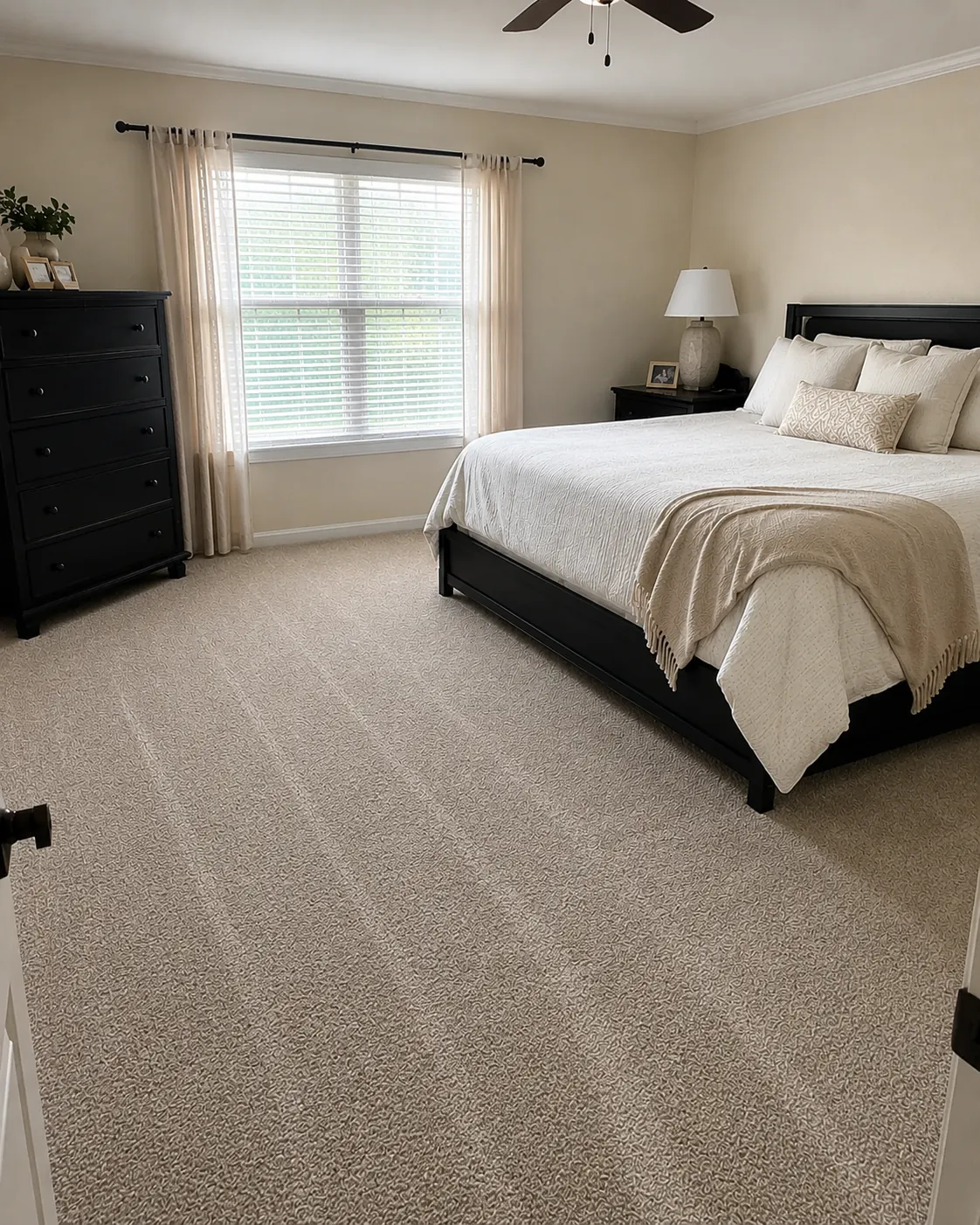

You slide a chair aside and find a richer shade of carpet beneath it. Or you notice a pale strip by the patio door that was not there when the room was new. Before buying shades or blaming the cleaner, look at the shape of the change. Where color is missing often tells you why.
Sunlight is the most common reason carpet loses color. Its rays slowly break down dyes in the fibers. Other things can cause it too, including air pollutants, bleach, some skin products and certain cleaners. No carpet is truly fade-proof. Still, good choices can slow the change and help keep it even.
First, read the pattern on the floor
| What you see | Likely cause | What it means |
|---|---|---|
| An even lighter band near a window, glass door or skylight | Sunlight | The dye is wearing down where light lands most. Rooms with south- or west-facing glass often show it first. |
| Small, random light spots, sometimes orange or pink | Bleach or another oxidizing chemical | Something on a hand, foot, towel or cleaner removed dye. The spot may appear days or weeks after contact. |
| The whole room looks duller or slightly off color | Air pollutants, age or built-up soil | Fumes in the air can shift color evenly. Dirt can also make carpet look faded when the dye is still there. |
| Flat, dull paths through doorways and halls | Traffic wear | Crushed or matted fibers reflect light differently. This is wear, not true color loss. |
Check under a rug or a large chair for comparison. If that covered section is brighter, light or air likely changed the open area. If the color seems right when you look straight down but the path looks dull from the doorway, flattened pile may be playing tricks on your eyes.
6 ways to slow carpet fading
1. Control direct sun during the brightest hours
Blinds, shades and drapes lower the amount of UV light that reaches the carpet. Close them when sun pours across the floor, especially in a bright sunroom or a bedroom you rarely use by day. The low winter sun can also reach deeper into a room than summer sun, so watch where light falls as the seasons change.
2. Ask about window film or low-E glass
UV-reducing window film and low-E glass can cut how much UV gets through windows. They lower exposure; they do not stop fading for good. A window professional can tell you what suits your glass. Keep using shades as well, because direct light can still matter.
3. Move furniture and rugs now and then
A sofa or rug that never moves can leave a sharp outline. Change the layout from time to time so light reaches the carpet more evenly. The goal is not to stop every change. It is to avoid a bright square beside a pale border when you redecorate.
4. Keep acne products and bleach away from carpet
Benzoyl peroxide, found in some acne creams and face washes, can remove carpet dye. Bedrooms and bathroom doorways are common trouble spots. A towel or pillowcase can carry the product to the floor, or wet hands can touch the carpet. Let skin products dry, keep used towels off the floor, and handle bleach with care.
5. Read the cleaner label before using it
Some household cleaners can strip color, especially if they contain bleach or other strong chemicals. Use a product your carpet’s care guide allows, and test it first in a closet or another hidden spot. Our guide on how often to clean carpet covers planned deep cleaning; this step is about keeping a spot cleaner from making a new pale mark.
6. Choose carpet with sunny rooms in mind
Solution-dyed fibers get color during fiber making, so the color runs through the strand. They usually hold color better than surface-dyed fibers, but they can still fade. Fiber type also matters, which is why our nylon vs polyester comparison is worth reading before you shop. Always check the exact product’s written specs and warranty.
Can faded carpet be fixed?
Usually, cleaning will not bring back lost color. It can remove dirt that hides the true shade, so a dull room may look better after a good clean. But sun-faded dye and bleach spots do not return to their old color with soap or water.
A small spot may sometimes be patched with leftover carpet. Whether that will look right is a judgment call for a skilled pro, since even matching carpet may not blend. If fading spreads across a room, the choice is often to live with it or replace it. Our signs it is time to replace carpet can help you weigh wear, smell and other problems with the color change.
Questions to ask before you replace carpet in a sunny room
- Is this carpet solution-dyed, surface-dyed or made another way?
- What do the written warranty and care guide say about fading, sunlight and chemicals?
- Will this color make a light change easier or harder to notice?
- Can I keep a large sample in the room to see it in morning and afternoon light?
- Which cleaning products and methods does the carpet maker approve?
Color choice matters for more than fading. Our article on carpet colors that hide dirt explains how shade and texture affect everyday looks.
When comparing options, browse our carpet flooring page with your room’s light and habits in mind.
Choosing hard flooring for a bright room instead? Our post on whether sunlight fades vinyl plank covers that floor’s own questions about sun, heat and warranty rules.
Take a few photos of the faded areas and the brighter covered spots before your visit. Then request a free carpet estimate for your sunny room, or call (609) 300-0509 to talk through your choices.