
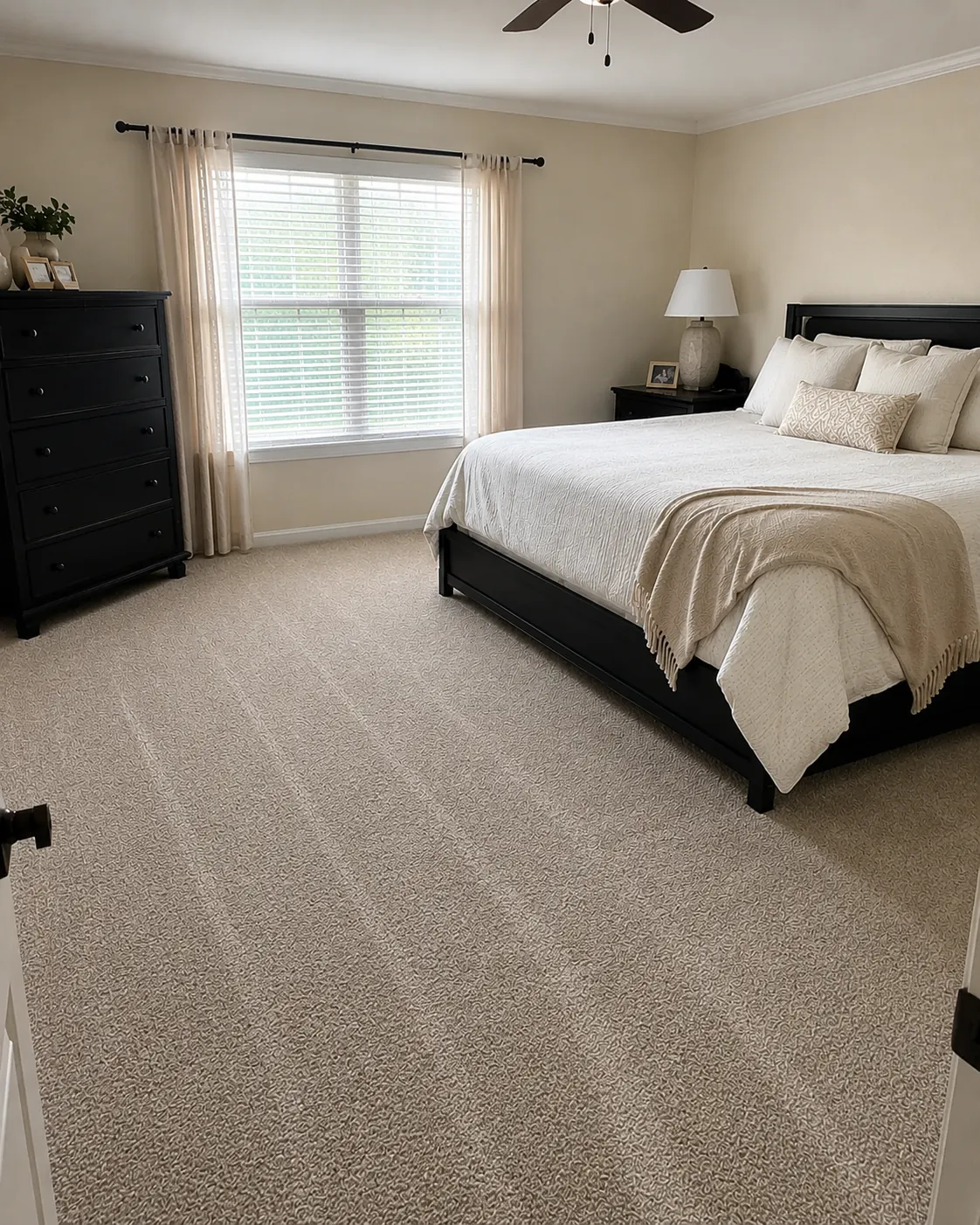

You slide the sofa to a new wall, and four square pits stare back at you. Most of the time those marks are not permanent. Carpet fibers bend under weight, and with a little moisture and patience many of them stand back up.
The trick is to start gentle and move up only when the easy step fails. Below is a ladder of five fixes, a quick way to tell what kind of dent you have, and a clear point where it makes sense to stop.
These are home-care tips, not a promise from any carpet maker. Results vary by fiber, pile and how long the furniture sat there. Read your carpet's care guide, and test anything wet or warm on a hidden spot first, such as inside a closet.
First, a 30-second test: fibers or pad?
Press the dent with your palm, then press a normal patch of carpet next to it. Now dampen a corner of the dent with a little water and rub the tufts upward with a fingertip.
- If the tufts lift and look fuller once damp, the dent is mostly in the fibers. The ladder below has a good chance of working.
- If the tufts lift but the spot still feels flat, hard or lower than the carpet around it, the pad underneath is likely crushed. Surface tricks help the look but cannot rebuild the cushion.
- If the tufts look frayed, thin or snapped, the yarn itself is damaged. No amount of fluffing brings back broken fiber.
Step 1: Fluff it by hand
Fresh, shallow dents often need nothing more than your fingers. Work across the dent in several directions, lifting the tufts as you go. The edge of a spoon or a stiff, clean brush helps on denser carpet. Go slowly so you lift fibers instead of pulling them.
Step 2: Let ice melt into it overnight
Set ice cubes in the dent, one in each pit, and leave them overnight. As they melt, the water soaks the bent tufts and they swell back toward their old shape. In the morning, blot up any water left on top with a clean towel, then lift the pile with your fingers or a spoon.
Use only a small amount of ice. The goal is damp fibers, not a soaked pad.
Step 3: Damp cloth and gentle steam
For stubborn spots, lay a damp, clean cloth over the dent. Hold a steamer or an iron set to steam just above the cloth, never resting on it, for a short burst. Then lift the cloth and brush the tufts upward while they are warm and damp.
Never put a hot iron straight on carpet. Many carpets are made of synthetic fibers that can melt, glaze or change color with too much heat. If the care guide warns against heat, skip this step.
Step 4: Finish with the vacuum
Once the area is dry, run the vacuum over it in a few directions. The suction and the brush roll help blend the spot into the carpet around it so it stops catching the light.
Step 5: Know when to stop
If two rounds of ice and one round of steam leave the dent unchanged, more tries are unlikely to help and may wear the yarn. Stop and call for help when you see any of these:
- The dent is in wool or another natural fiber, which can shrink or react badly to heat and water.
- The spot still feels flat or hard under your palm after the fibers stand up.
- Tufts look thin, crushed flat at the tip, or broken.
- The dent came from furniture that stood in one place for many years.
A crushed pad can also be a sign the cushion is worn out across the room, not just under the legs. Our guide on what padding should go under carpet explains how pads hold up and what to look for.
Rearranging before new carpet or a move
Moving everything out before an install? Old dents in the carpet you are tearing out do not matter. Selling a home? Treat the dents a week or so before photos so the fibers have time to dry and settle. If you are keeping the carpet and moving rooms around, lift furniture instead of dragging it, which can bend tufts and stretch seams.
Stop the next dent before it starts
- Put furniture cups or wide coasters under legs. They spread the weight over more carpet, which matters most for thin, narrow feet.
- Shift heavy pieces a little now and then so the same tufts are not pinned down for years.
- Pick the right style. Dense, tightly twisted pile tends to spring back better than loose, long pile.
- Ask about the pad when you buy. A firm, quality cushion handles heavy furniture far better than a thin one.
Shopping for carpet that stands up to a busy living room? Take a look at our carpet collections to compare fibers and styles.
Dents that will not lift?
If the pad is crushed or the fibers are worn through, it may be time to look at the whole room. You can get a free in-home carpet estimate, or call (609) 300-0509, and we can talk through what makes sense for your carpet.