
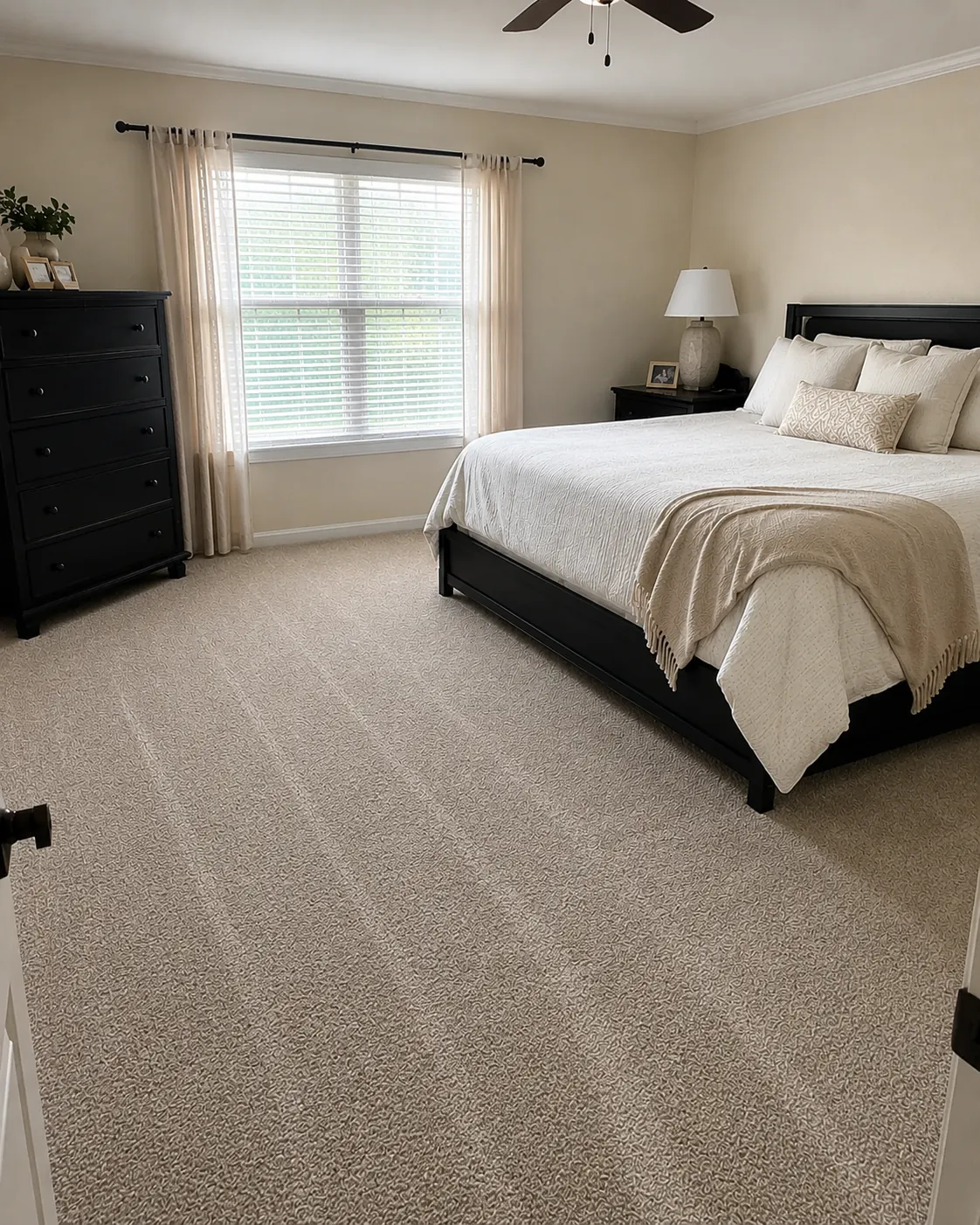

The couch slides back into place, the kids run through, and a few weeks later there is a soft hump in the middle of the living room carpet. You press it flat with your foot and it pops right back up. That bump is a wrinkle, and it is one of the more common carpet complaints after a new install. The good news is that many wrinkles can be fixed without tearing the carpet out.
The best clue is timing. When the ripple first showed up says a lot about why it is there. So this guide starts with the calendar, then helps you decide between a repair and a new floor.
Why carpet ripples in the first place
Wall-to-wall carpet is held flat by tension. Thin wood strips with small pins, called tack strips, run along the edges of the room. The carpet is pulled tight across the floor and hooked onto those pins. If the pull is too weak, or the edges let go, the carpet has slack. Slack has nowhere to go but up, so it forms a ridge.
In bigger rooms, installers use a power stretcher. It braces against one wall and pushes the carpet toward the far wall with steady force. A knee kicker is a smaller tool bumped with the knee. It works well for closets and tight spots, but on its own it usually cannot pull a large room tight enough.
Start with the question: when did it appear?
Think back and pick the moment that fits your floor best. Each one points to a different likely cause.
In the first few weeks after install
Early ripples most often mean the carpet was never stretched tight enough. Skipping the power stretcher in a large room is the usual suspect. Carpet that went down before it had time to settle into the room, often called acclimating, can also relax once it adjusts. Either way, this is an installation question, so the installer should hear about it early.
Right after a deep cleaning
Wet cleaning can soak the carpet backing. Damp backing may loosen and puff up for a while. Often the carpet flattens again once it dries all the way. If the ridge is still there after the room is fully dry, the carpet likely had slack before the cleaning, and the water simply made it easy to see.
After the seasons change
South Jersey swings from muggy summers to dry, heated winter air. Carpet backing can grow a little in damp air and draw back in dry air. A carpet that was tight enough may ride through those swings just fine. One that was barely snug can start to ripple when the weather turns. Running air conditioning in summer and keeping the heat steady in winter helps limit the swing.
In one spot only
A single wrinkle often has a single cause. Look for a heavy dresser or sofa that was dragged instead of lifted. Check the nearest wall for a loose edge where the carpet slipped off its tack strip. On concrete floors, tack strips can lose their hold more easily. A soft spot under the wrinkle can also mean the pad below is worn or bunched.
A wrinkle that returns soon after a re-stretch is a sign the trouble is not just tension. Loose tack strips, a pad that is too soft or too thick, or moisture under the carpet are worth checking before stretching again.
What actually fixes a wrinkle
The standard repair is a re-stretch. A pro unhooks the carpet along the edges, uses a power stretcher to pull it tight from a fixed wall to the far wall, hooks it back on the pins, and trims any extra. Steam, ironing, or a cleaning will not put tension back into carpet. They may flatten a bump for a day, but the slack is still there.
Some problems need their own repair. A seam that is pulling apart is fixed at the seam. A pad that has gone flat or crumbly gets replaced under the carpet. Tack strips that will not hold get swapped out. A good repair looks at all of these, not just the ridge you can see.
Repair or replace? A side-by-side look
| Check this | Leans toward a re-stretch | Leans toward new carpet |
|---|---|---|
| Age of the carpet | Fairly new, with life left in the fiber | Older carpet that is worn, matted, or faded |
| The pad underneath | Still springy and in one piece | Flat, crumbling, or stained |
| The wrinkle pattern | One room or a few ridges | Many ridges that keep coming back |
| Signs of water | None | Musty smell, stains, or damp spots |
| The backing | Holds firm when the edge is lifted | Peeling layers that cannot hold a stretch |
If most of your answers land in the right-hand column, our guide to signs it may be time for new carpet walks through the other clues to weigh.
Do not live with it too long
A carpet ridge is easy to catch a toe on, especially for young kids, older adults, or anyone carrying a laundry basket. Ridges also take more wear on top, so the fiber there can look rubbed down sooner. And vacuuming over the same bump again and again can make it worse.
Before you call: take photos and read your paperwork
Snap clear photos of the wrinkle with a date, and note when you first spotted it. Then pull out your written quote and any warranty papers. Many installers stand behind their labor for some time after the job, and wrinkles that show up early are often the kind of thing that labor coverage is meant for. Your own terms are what count, so read them and call sooner rather than later.
Questions to ask whoever does the stretch
- Will you use a power stretcher, or only a knee kicker?
- Will you check the tack strips and replace any that are loose?
- Is the pad in good shape, or should it be changed while the carpet is up?
- Are there seams in this room, and will they be checked too?
- Who moves the furniture, and does anything need to be cleared first?
- If the wrinkle comes back, what happens next?
Choosing the right pad is part of keeping carpet flat for years. Our page on how pad density affects carpet explains what to look for.
Thinking about a fresh start instead of a repair? Browse our carpet styles and lines to see what fits each room.
Want someone to look at the ripple and talk through your options? Set up a free in-home carpet visit, or call (609) 300-0509.